

| Keyword | Description |
|---|---|
| Cempasúchil | A type of marigold flower used in Day of the Dead celebrations. |
| Chinampas | Artificial islands used for farming. |
| Día de Muertos | Day of the Dead, a Mexican holiday to honor deceased loved ones. |
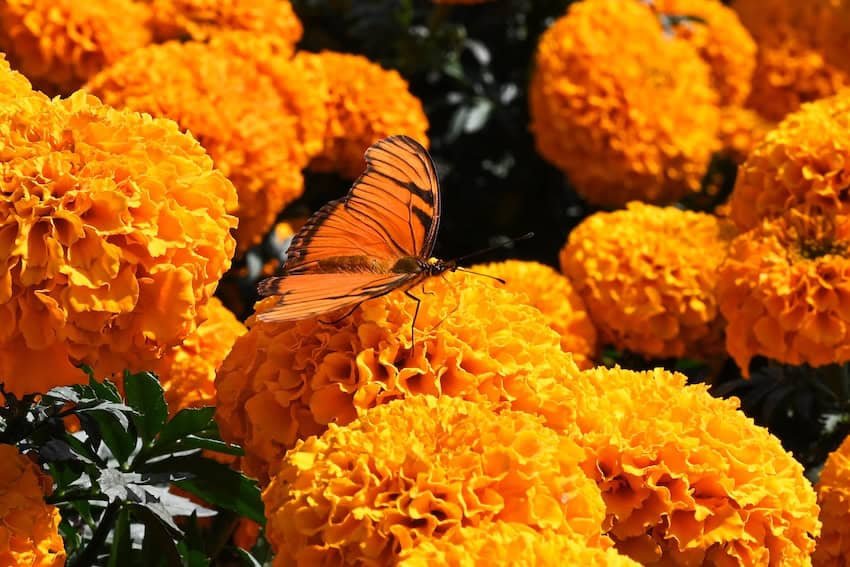
In Mexico City, the production of cempasúchil flowers has reached a new record. Over 10 million of these marigold flowers have been grown to celebrate the upcoming Día de Muertos (Day of the Dead), which is a special time to remember loved ones who have passed away. This year, flower production increased by 53.8% compared to last year.
The flowers are grown on chinampas (artificial islands) in Xochimilco, a part of Mexico City. The city government helped by providing money, seeds, and tools to 597 flower producers. These flowers, marked with a Green Seal, are sold all over Mexico City, ensuring they are grown sustainably. Prices range from 15 to 30 pesos (about 80 cents to $1.60).
Mayor Clara Brugada announced free cultural events from October 30 to November 2. A huge Catrina figure and 100,000 cempasúchil plants will be displayed in the central Zócalo square. People can also visit Chapultepec Park to see a cempasúchil trail or go to Xochimilco for performances and celebrations. This helps support the local farmers and keeps the tradition alive!
Bridging words
These words sound similar in English and Spanish: Why not practice them now?
| English | Spanish |
|---|---|
| Flower | Flor |
| Culture | Cultura |
| Market | Mercado |
Time to discuss
- Why do you think cempasúchil flowers are important for Día de Muertos?
- How does growing flowers on chinampas help the environment?
- What can we learn from Mexico City’s way of celebrating Día de Muertos?
Let’s Write
Answer the following questions in one paragraph:
- Describe how the city supports flower producers in Xochimilco.
- What are some events people can enjoy during the Día de Muertos celebrations?

