

| Keyword | Description |
|---|---|
| Cretaceous | A geological period from about 145 to 66 million years ago. |
| Mosasaurs | Extinct marine reptiles related to modern lizards and snakes. |
| Paleontology | The scientific study of life in the geological past, particularly through the study of fossils. |
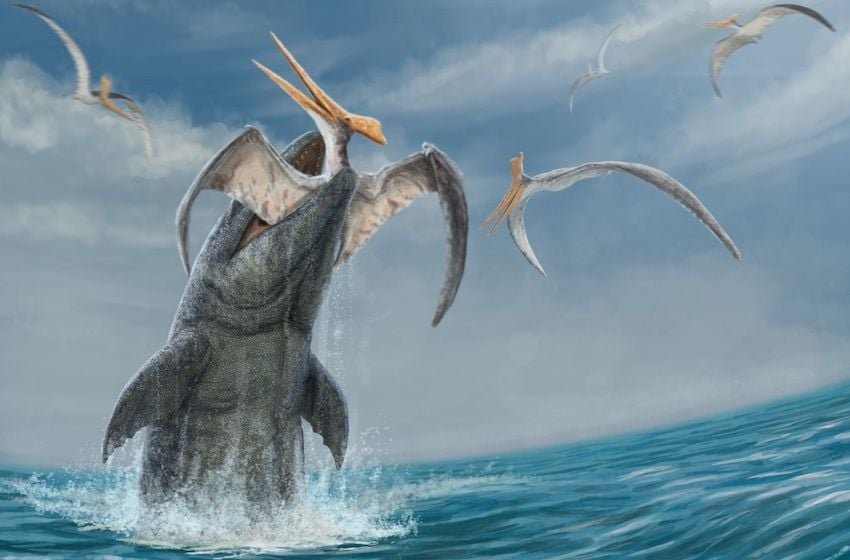
A fascinating discovery has emerged from a fossil skull unearthed 25 years ago in northern Mexico. Scientists have identified a new species of marine reptile, now named Prognathodon cipactli. This ancient creature lived around 70 million years ago during the Cretaceous period, a time when much of present-day northeastern Mexico was submerged under ocean waters.
The skull, found in the Méndez Formation near Linares, Nuevo León, belonged to a mosasaur, a group of large marine reptiles that were apex predators of their time. These creatures, closely related to modern lizards and snakes, roamed the oceans towards the end of the dinosaur era. The recent study, published in a German geoscience journal, has reexamined and officially categorized the specimen, highlighting its powerful jaws and teeth designed for crushing large prey.
Héctor Rivera-Sylva, a leading paleontologist at the Desert Museum in Saltillo, explained that mosasaurs played a significant role in the ocean’s ecosystem, akin to today’s sharks and orcas. The newly identified species, with its robust teeth and short snout, was adept at capturing formidable prey, including large fish and other marine reptiles. Although only the skull was recovered, the fossil is considered a relatively complete example of a mosasaur skull.
The name “Prognathodon cipactli” draws inspiration from Aztec mythology, where Cipactli was a primordial aquatic creature. This cultural reference highlights the deep connections between paleontological discoveries and human history. The find adds to a growing list of significant fossils in the region, which paint a picture of a complex ecosystem filled with both land and sea predators.
This discovery provides a glimpse into a fascinating era when mosasaurs dominated the oceans and further enriches our understanding of prehistoric marine life.
Bridging words
These words sound similar in English and Spanish: Why not practice them now?
| English | Spanish |
|---|---|
| Fossil | Fósil |
| Marine | Marino |
| Reptile | Reptil |
Time to discuss
- How do discoveries like Prognathodon cipactli help us understand prehistoric ecosystems?
- What role does mythology play in naming new species, and why is it significant?
- How might the study of fossils influence modern marine biology?
Let’s Write
Answer the following questions in one paragraph
- Describe the characteristics that made mosasaurs effective marine predators.
- Explain the significance of finding fossils in areas like the Méndez Formation.

