

| Keyword | Description |
|---|---|
| Mexican tetra | A small freshwater fish found in caves and rivers in Mexico. |
| Caballo Moro | A limestone cave system in Tamaulipas, Mexico, with a unique fish habitat. |
| Cx50 | A gene linked to eye development in fish. |
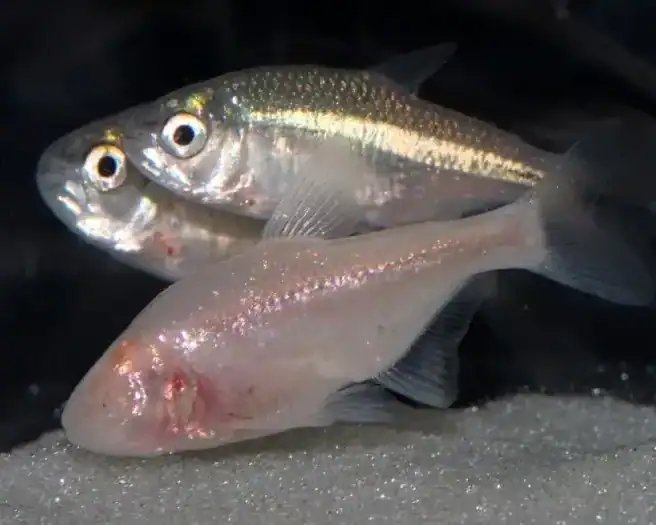
In the mountains of Tamaulipas, Mexico, there is a special cave called Caballo Moro. Inside, scientists have found something amazing: two types of the same fish called Mexican tetras. One type can see, and the other type is completely blind. This makes Caballo Moro very special because it’s like a natural science experiment.
Part of the cave’s ceiling fell in a long time ago, letting some light into the cave. This created two different environments. The sighted fish live in the lighted area, while the blind fish stay in the dark parts.
Scientists are studying these fish to understand why some lose their sight. They looked at the DNA of both types of fish and found one important gene, Cx50, that affects how eyes grow. When they tested it in the lab, they saw that changes in this gene can make fish lose their eyesight.
The sighted fish in the cave are thought to have come from outside and mixed with the blind fish thousands of generations ago. Today, the fish have mixed ancestry, but they are either fully sighted or fully blind.
Bridging words
These words sound similar in English and Spanish: Why not practice them now?
| English | Spanish |
|---|---|
| genetic | genético |
| experiment | experimento |
| population | población |
Time to discuss
- Why do you think some fish in the cave are blind while others can see?
- What might happen if the environment in the cave changes?
- How do scientists use DNA to study changes in animals?
Let’s Write
Answer the following questions in one paragraph
- Describe the unique environment of Caballo Moro and its fish.
- Explain the role of the Cx50 gene in the fish’s eyesight.

