

| Keyword | Description |
|---|---|
| Azcatitlan Codex | An ancient illustrated book that tells the history of the Mexica people. |
| Mexica | A group of Nahuatl-speaking people also known as the Aztecs. |
| Tenochtitlán | The ancient capital city of the Mexica empire, located where Mexico City is today. |
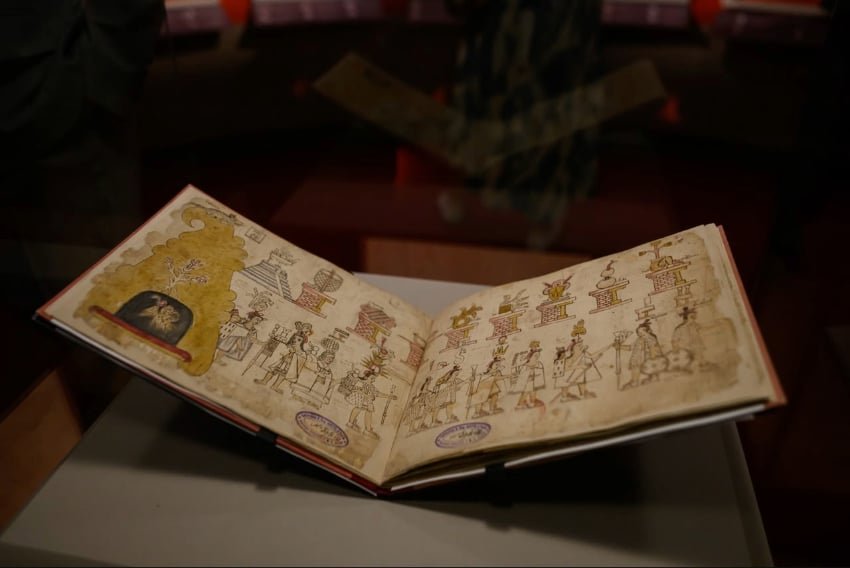
The Azcatitlan Codex, an important book that tells the story of the Mexica people, is back in Mexico after 186 years. This codex has been in France since the 1840s and is now on display in Mexico City. The Mexica, who are often called Aztecs, built a powerful empire centered on the city of Tenochtitlán, which is now Mexico City.
This codex was created in the late 16th or early 17th century. It contains colorful pictures and stories about the Mexica’s journey from their mythical homeland, Aztlán, to the founding of Tenochtitlán. It also shows the arrival of the Spanish in 1519, led by Hernán Cortés, and how the Mexica world changed after that.
The codex is part of a cultural exchange between Mexico and France to celebrate 200 years of friendship. While the Azcatitlan Codex is in Mexico, France is displaying the Boturini Codex, which tells more stories about the Mexica’s travels. These exchanges help countries share and learn from each other’s histories. The Azcatitlan Codex is on display at the National Museum of Anthropology in Mexico City until December.
Bridging words
These words sound similar in English and Spanish: Why not practice them now?
| English | Spanish |
|---|---|
| Codex | Códice |
| Museum | Museo |
| Culture | Cultura |
Time to discuss
- Why do you think it is important for countries to exchange cultural items like the Azcatitlan Codex?
- What might people learn from seeing the Azcatitlan Codex in Mexico?
- How do you think the Mexica people felt when the Spanish arrived in Tenochtitlán?
Let’s Write
Answer the following questions in one paragraph
- Describe the journey of the Azcatitlan Codex from Mexico to France and back.
- Explain what the Azcatitlan Codex tells us about the history of the Mexica people.

