

| Keyword | Description |
|---|---|
| Waste-to-energy | A process of generating energy in the form of electricity or heat from the primary treatment of waste. |
| Circular economy | An economic system aimed at eliminating waste and the continual use of resources. |
| Sargassum | A type of brown seaweed that often accumulates in large amounts along coastlines. |
Mexico is exploring ways to transform its waste management by adopting a waste-to-energy model. This approach could help Mexico produce clean energy while addressing waste disposal issues and freeing up land currently used for landfills. To learn from experts, Environment Minister Alicia Bárcena visited China, a leader in waste-to-energy technology.
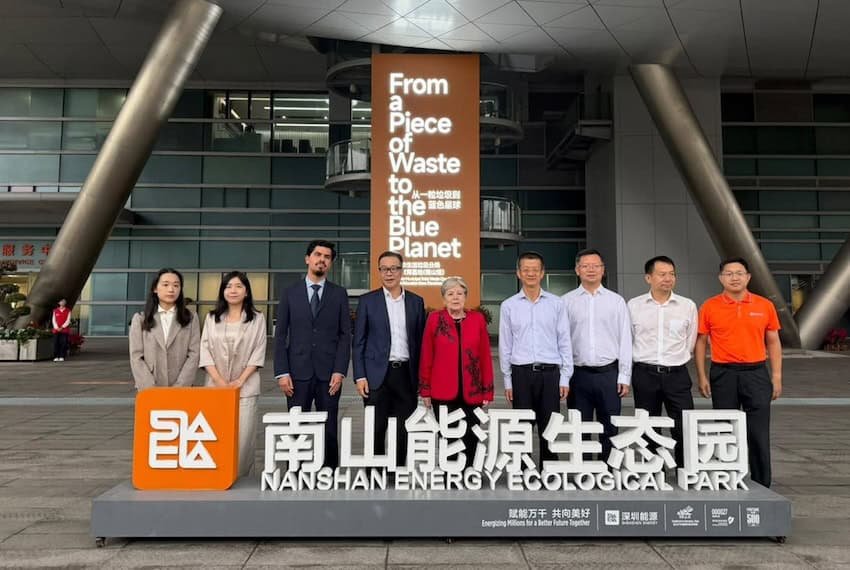
During her visit, Bárcena toured several Chinese facilities that specialize in waste utilization and water restoration. She aimed to understand their strategies for ecosystem restoration and waterway cleaning, assessing their potential application in Mexico. Her visit occurred before the 33rd Asia-Pacific Economic Cooperation (APEC) summit in China, where Mexican President Claudia Sheinbaum plans to discuss technological collaboration with China. This includes developing methods to use organic waste, like sargassum, to generate energy and reduce greenhouse gas emissions.
Bárcena visited Zhuhai in Guangdong province to see the SUS Environment plant. This facility processes up to 3,000 tonnes of waste daily, producing 90 megawatts of electricity. She noted that China increased its solid waste-to-energy conversion from 9.8% in 2005 to 84.6% by 2024, drastically reducing landfill reliance.
Many Chinese waste-to-energy plants incorporate advanced technologies, such as artificial intelligence, to improve operations. Bárcena also visited Shenzhen’s Honghu underground plant, capable of processing 100,000 tonnes of wastewater daily. Above this facility is a public park, illustrating how clean public spaces can be created.
Bárcena emphasized that Shenzhen exemplifies successful river reclamation, ecosystem restoration and transforming polluted areas into community spaces. Her observations suggest potential paths for Mexico to transition from landfills to a circular economy model.
Bridging words
These words sound similar in English and Spanish: Why not practice them now?
| English | Spanish |
|---|---|
| Economy | Economía |
| Technology | Tecnología |
| Potential | Potencial |
Time to discuss
- How can waste-to-energy technology benefit the environment?
- What challenges might Mexico face in adopting a circular economy model?
- In what ways can international cooperation enhance technological development?
Let’s Write
Answer the following questions in one paragraph.
- Describe the potential benefits of transforming waste into energy.
- What role does technology play in modern waste management strategies?

