

| Keyword | Description |
|---|---|
| Fertility Rate | The average number of children a woman is expected to have during her lifetime. |
| Median Age | The age that divides a population into two equal groups, with half younger and half older. |
| Replacement-level Fertility | The total fertility rate needed to keep a population size stable over time, without migration. |
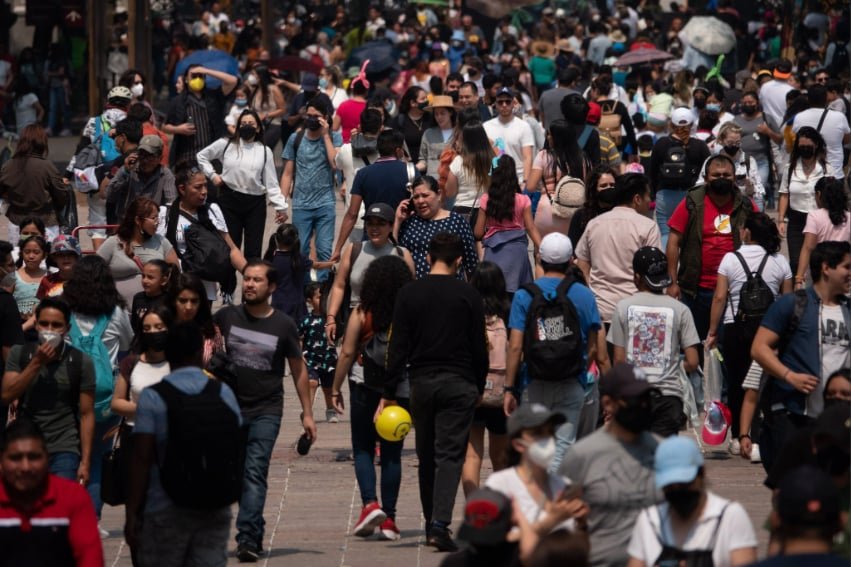
According to the National Institute of Statistics and Geography (INEGI), Mexico’s population reached over 130.9 million in late 2025. This reflects a 3.9% increase from 2020, when the population was 126.01 million. The findings were part of INEGI’s 2025 Intercensal Survey, conducted in October and November, covering more than 7.3 million homes. Despite this growth, Mexico’s population expansion is slowing, with the fertility rate decreasing and the median age rising.
By 2025, Mexico’s median age increased to 32, up from 29 in 2020, indicating a shift towards an older population. This demographic change is accompanied by a decline in younger age groups and a rise in the number of adults and older adults. Notably, 29.8% of Mexico’s population is aged 19 and below. Mexico’s fertility rate dropped to 1.2 in 2024 from 1.9 in 2019, with Mexico City showing the lowest rate at 0.8 and Chiapas the highest at 1.8.
The replacement-level fertility rate, necessary to maintain a stable population without migration, is generally 2.1. However, this rate can vary due to factors like the sex ratio and child mortality rates. President Claudia Sheinbaum acknowledged these trends in a press conference, emphasizing that Mexicans are having fewer children or delaying childbirth, a trend that mirrors global patterns. The federal Finance Ministry warned that demographic changes might reduce the taxpayer base in the future, even as obligations for senior pensions increase.
Bridging words
These words sound similar in English and Spanish: Why not practice them now?
| English | Spanish |
|---|---|
| Population | Población |
| Immigration | Inmigración |
| Demographic | Demográfico |
Time to discuss
- What factors might contribute to Mexico’s declining fertility rate?
- How could an aging population impact Mexico’s economy and society?
- Why is it important to maintain a stable population growth rate?
Let’s Write
Answer the following questions in one paragraph.
- Explain how global trends in fertility rates might affect other countries.
- Discuss the potential challenges that Mexico might face with a declining population growth rate.

