

| Keyword | Description |
|---|---|
| Trade Agreement | A formal deal between countries about trade rules. |
| Geographical Indication | A sign used on products that have a specific place of origin. |
| USMCA | The trade agreement between the U.S., Mexico and Canada. |
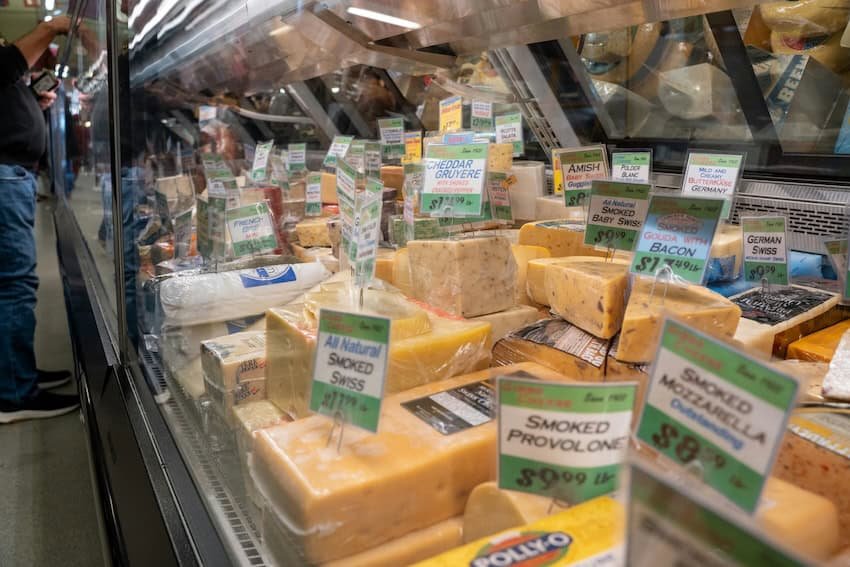
Mexico and the U.S. are having disagreements over cheese names in their trade talks. This issue began when Mexico signed a trade deal with the European Union (EU) in May.
The deal gives special protection to certain European products because their names are linked to specific regions, like Parmigiano Reggiano and Feta cheese. This means only cheese made in those regions can use those names.
The U.S. disagrees, saying names like parmesan and feta are common and should be used by anyone. The U.S. wants to keep selling cheese in Mexico without having to label it as “imitation” or “style.”
Jaime Castañeda from the U.S. Dairy Export Council believes Mexico should allow U.S. cheese producers to keep using these names.
Mexico is one of the top cheese consumers globally, importing about $1 billion worth of U.S. cheese every year. However, the EU only exports $200 million worth of dairy to Mexico.
The U.S. is using its trade agreement with Mexico and Canada, known as the USMCA, to try and change Mexico’s deal with the EU. The U.S. dairy industry is important for its economy, supporting millions of jobs. However, some people think U.S. cheeses are cheaper and negatively impact local Mexican cheese producers.
Bridging words
These words sound similar in English and Spanish: Why not practice them now?
| English | Spanish |
|---|---|
| Trade | Comercio |
| Imitation | Imitación |
| Protection | Protección |
Time to discuss
- Why do you think some names are protected by law while others are not?
- How might this disagreement affect cheese lovers in Mexico?
- What are the pros and cons of having trade agreements between countries?
Let’s Write
Answer the following questions in one paragraph.
- What are the possible consequences if Mexico changes its agreement with the EU?
- Why is the cheese trade so important to the U.S. economy?

