

| Keyword | Description |
|---|---|
| Trade Agreement | A deal between countries about buying and selling goods. |
| Parmesan | A type of cheese originally from Italy. |
| Imitation | A fake object that is supposed to look real. |
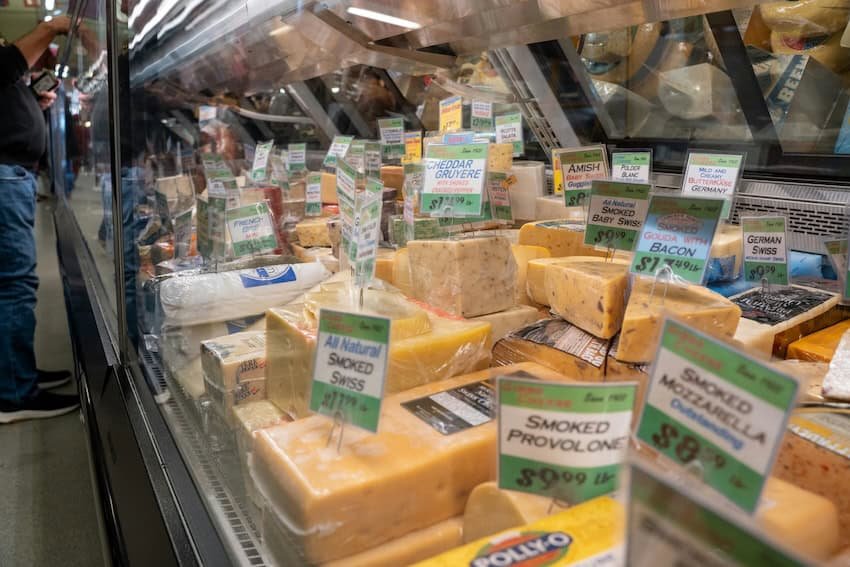
Mexico and the United States are having a disagreement about cheese names. This problem started because of a trade agreement between Mexico and the European Union (EU). The deal says that certain cheeses like Parmigiano Reggiano and Feta can only be called by those names if they come from specific regions in Europe.
The U.S. is worried that American cheese makers might not be able to sell their cheeses in Mexico under names like parmesan and feta. Instead, they might have to use words like “imitation” or “style” on their labels. The U.S. believes these cheese names are generic, meaning anyone can use them, but the EU disagrees.
Mexico is one of the top consumers of cheese in the world. It buys about $1 billion worth of cheese from the U.S. every year. Meanwhile, the EU sells about $200 million worth of cheese to Mexico.
The U.S. is using another trade deal called the USMCA to try to change Mexico’s mind. However, some people say that lower-quality U.S. cheeses are affecting locally made cheeses in Mexico.
Bridging words
These words sound similar in English and Spanish: Why not practice them now?
| English | Spanish |
|---|---|
| Cheese | Queso |
| Market | Mercado |
| Region | Región |
Time to discuss
- Why do you think certain cheese names are important to protect?
- How might this trade disagreement affect cheese lovers in Mexico?
- What do you think could be a fair solution for both the U.S. and EU?
Let’s Write
Answer the following questions in one paragraph.
- Explain why the U.S. and EU disagree about cheese names.
- What role does the USMCA play in this disagreement?

