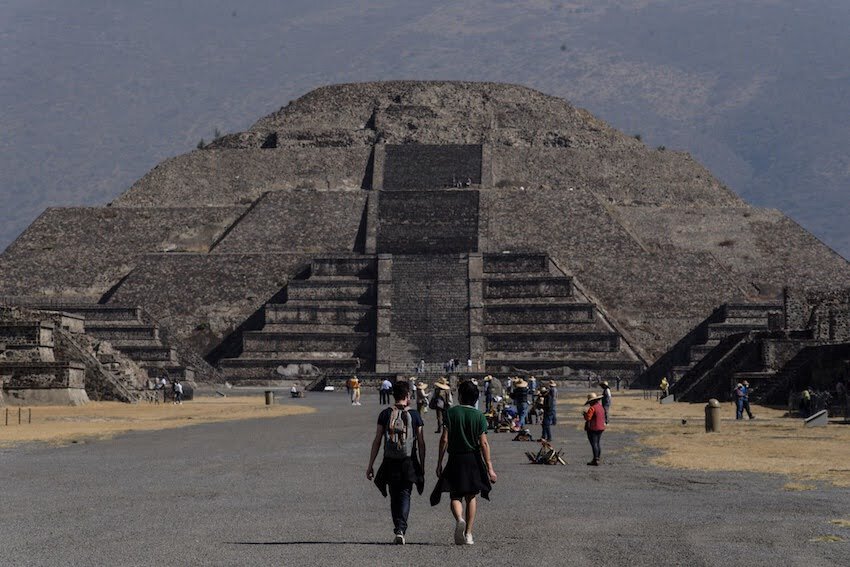
 The Pyramid of the Moon at Teotihuacán. (Mario Jasso/Cuartoscuro)
| Keyword |
Description |
| Anthropology |
The study of human beings and their ancestors |
| Nahuatl |
The language of the Aztecs |
| Pandemic |
An outbreak of a disease that occurs over a wide geographic area (such as multiple countries or continents) and affects a significant proportion of the population |
After five years, part of Teotihuacán’s Pyramid of the Moon is open for visitors again. Located about 50 kilometers northeast of Mexico City, this famous pyramid was closed in March 2020 due to the COVID-19 pandemic. The shutdown lasted while the National Institute of Anthropology and History (INAH), who look after Mexico’s archaeological monuments, worked to preserve and restore the monument. On May 19, 2025, the first section was reopened to climbers. Now, visitors can climb the first five platforms and 47 steps; however, the higher levels remain closed to help protect the monument.
INAH made several improvements during the closure. They fixed and reinforced old stairs, cleaned the pyramid professionally, and installed new handrails to make climbing safer for everyone. INAH and local officials promised to keep working together to protect Teotihuacán and its pyramids. Interestingly, even celebrity visitors like Alicia Keys couldn’t get special access during the closure.
Teotihuacán is one of Mexico’s most historic pre-Hispanic cities. It was built between 200 and 450 A.D., and its name in Nahuatl means “place where the gods were created.” The site has a 100-peso entrance fee, but kids under 13, as well as seniors, retirees, people with disabilities, teachers, and students, can enter for free if they have a valid ID. The Pyramid of the Moon stands at the northern end of the Avenue of the Dead and is the site’s second-largest pyramid, once important for ceremonies and rituals.
Let's discuss!
- Should tourists be allowed to climb ancient monuments like the Pyramid of the Moon, or should these sites be preserved without public access?
- How can tourism be balanced with the need to protect cultural heritage sites?
- Is it fair to charge an entrance fee to visit important historical sites, considering their cultural significance?


