| Keyword |
Description |
| Anthropology |
The study of human beings and their ancestors |
| Nahuatl |
The language of the Aztecs |
| Pandemic |
An outbreak of a disease that occurs over a wide geographic area (such as multiple countries or continents) and affects a significant proportion of the population |
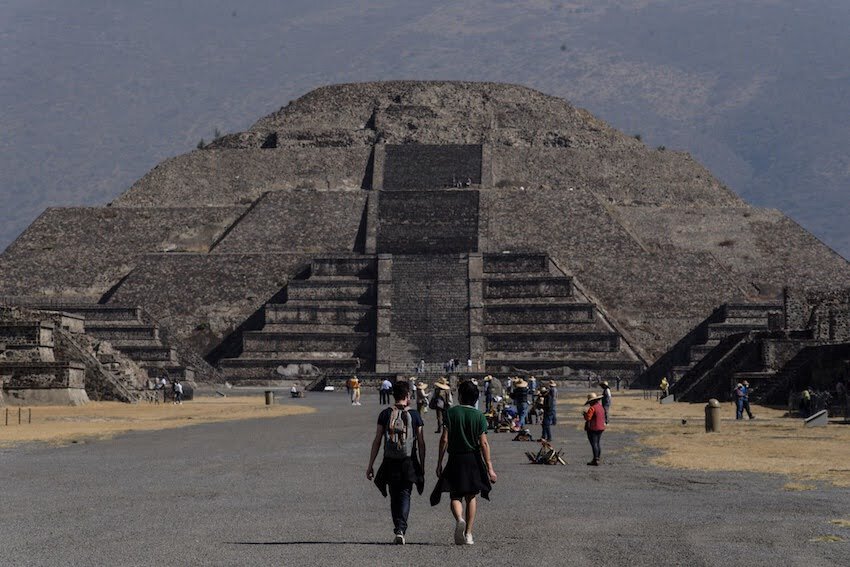
Teotihuacán’s Pyramid of the Moon — one of Mesoamerica’s most significant historic structures — has officially reopened to climbers after a five-year closure. This shutdown began in March 2020 with the outbreak of the COVID-19 pandemic, but restoration and safety measures prolonged the closure. The National Institute of Anthropology and History (INAH), which administers Mexico’s historic monuments, announced that starting May 19, 2025, visitors are permitted to climb only the first section, which consists of five platforms and 47 steps. The upper tiers will remain closed to safeguard the long-term integrity of the monument.
This carefully staged reopening balances growing tourism demand and heritage preservation. INAH undertook comprehensive repairs throughout the closure period, focusing on strengthening and reconstructing deteriorated stairs, conducting professional cleaning, and updating handrails. These measures aim to provide a safer experience for visitors while also honoring the pyramid’s archaeological importance.
INAH also stressed that cooperation with nearby municipalities is crucial for protecting Teotihuacán’s cultural legacy over the long term. Even celebrities, such as Alicia Keys — who visited Mexico City in 2023 — were not granted special access to climb the pyramid during the closure, highlighting the seriousness of conservation efforts.
Teotihuacán, located about 50km northeast of Mexico City, stands as a testament to pre-Hispanic urban planning and religious life. Its name, meaning “place where the gods were created” in Nahuatl, was given centuries after the city’s abandonment by the Mexica. The Pyramid of the Moon, second only in size to the Pyramid of the Sun, is situated at the northern end of the Avenue of the Dead. Built between 200 and 450 A.D., it served as an important ceremonial and ritual center that shaped the spiritual landscape of ancient Mexico.
Today, entry to the archaeological complex is 100 pesos, but children under 13, seniors, retirees, pensioners, people with disabilities, teachers, and students (with appropriate ID) receive free admission. This reopening breathes new life into one of Mexico’s great historical treasures, balancing public access with the preservation of its architectural wonders for future generations.
Time to discuss
- Do you think it’s fair that people are only allowed to climb the first section of the pyramid to protect it, or should everyone be allowed to reach the top?
- Is it more important to preserve historical monuments or to let more people fully enjoy them?
- What other ways could we protect ancient sites like Teotihuacán without limiting visitor access so much?


